Salt of the ancient Maya
First posted February 2022
Most of the field work on salt production is done throughout Belize. For Guatemala, mainly in Salinas de los Nueve Cerros. Salt is well known from the Maya highlands, which includes Sacapulas in Quiché and San Mateo Ixtatán in Huehuetenango, but not enough research has been started for other Guatemalan salt sources. Salt, of course, is known from the coast of the Pacific Ocean, but much more could still be achieved.
Salinas de los Nueve Cerros in Alta Verapaz was an important Pre-Columbian city because it was the only non-marine source of salt in the Maya lowlands. The salt was extracted from a fountain that flows from a hill with an underground salt dome. Estimates of the production of the Nueve Cerros salt flat vary between 300 and 2400; it was an important source of salt in the Classic period for the neighboring regions of Alto Usumacinta, the Guatemalan Petén and the Selva Lacandona. In addition, the city was also valuable for being a nexus of exchange between the Lowlands and the Highlands due to its location on the banks of the Chixoy River at the foot of the Highlands (Andrews, 1997 & Woodfill et al, 2012).
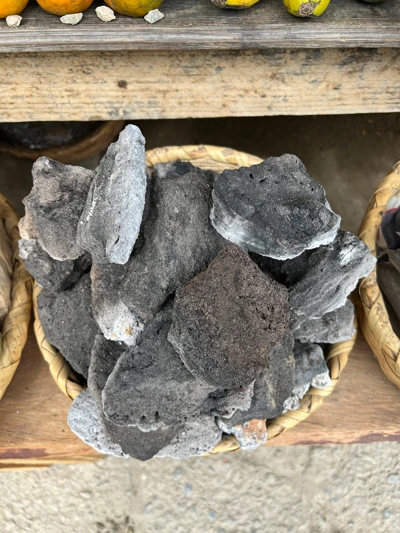
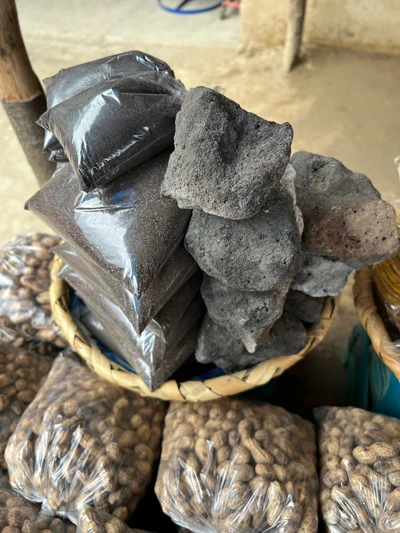
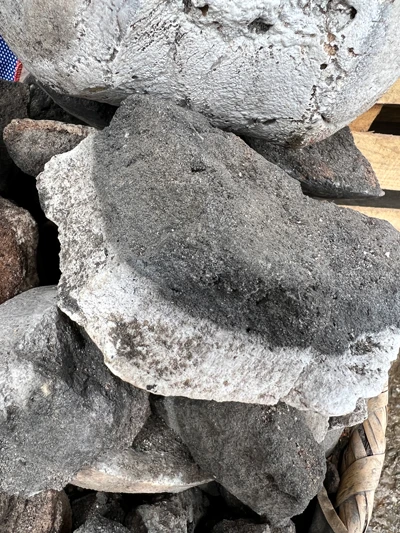
On the other side, Sacapaculas and San Mateo Ixtatán were centers of production and marketing of black salt, which is still produced to date, although in smaller quantities than in Pre-Columbian times. In the case of Sacapulas, the extraction of salt comes from the Chixoy or Rio Negro, while in San Mateo Ixtatán there are 4 different springs: Sjaj, Snahal, Almul and K’eyb’il, according to Marcos, D. (2021). The same author also mentions that, “black salt, in addition to being a special seasoning for food, also has healing properties, such as when it is mixed with apazote, which serves to reduce inflammation; It is used in the same way as a dewormer, or for sprains or sprains of bones, for which a handful of salt water with elder leaves is rubbed on the affected area to remove the pain.”
The bibliography presented here has the purpose of providing you useful references to understand the Mayan production of salt, as well as its trade from before the arrival of the Spaniards to the present.
Bibliography of Maya Salt in General
ANDREWS, Anthony P.
1978
Salt Making, Merchants and Markets: The Role of a Critical Resource in the development of Maya Civilization, PhD dissertation, Dept of Anthropology, University of Arizona. 392 pages.
Downloadable online:
https://repository.arizona.edu/handle/10150/565474
ANDREWS, Anthony P.
1980
The Salt Trade of the Ancient Maya. Archaeology 33(4):24-33.
Downloadable online:
https://ur.booksc.eu/book/56020430/e5156a
ANDREWS, Anthony P.
1980
“Salt and The Maya: Major Prehispanic Trading Spheres”, Atlatl 1.
Downloadable online:
https://journals.librarypublishing.arizona.edu/arizanthro
ANDREWS, Anthony P.
1983
Maya Salt Production and Trade. University of Arizona Press. 173 pages.
Sold online:
www.amazon.com/Maya-Production-Trade-Anthony-Andrews/dp/0816508135
ANDREWS, Anthony P. and Shirley B. MOCK
2019
Aj Atz’aam, “The Salt People”. The Use of Salt at the Maya City of Calakmul. Estudios de cultura maya, vol. LV, pp. 11-40, 2020. UNAM, Instituto de Investigaciones Filológicas.
Note: Very helpful to undestand the prehispanic uses and commercialization of the salt.
Available online:
https://www.redalyc.org/journal/2813/281364929001/html/
CASTELLON, B. R.
2017
Aportaciones recientes en el estudio de las tecnologías Salinas tradicionales en México y Centroamérica. De Re Metallica, 28, 2017 pp. 85-96.
Downloadable online:
https://dialnet.unirioja.es/servlet/articulo?codigo=6579612
LANGE, F. W.
1971
Marine Resources, a Viable Subsistence Alternative for the Prehistoric Lowland Maya. American Anthropologist 73: 619-639.
McKILLOP, Heather
2002
Salt: White Gold of the Ancient Maya. Gainesville: University Press of Florida. 256 pages.
Sold online:
www.amazon.com/Salt-White-Gold-Ancient-Studies/dp/0813033438
McKILLOP, Heather
2019
Los mayas de Belice y la sal durante el Periodo Clásico. Arqueología mexicana, Vol. 27, Nº. 158.
Available online:
https://dialnet.unirioja.es/servlet/articulo?codigo=6997784
MURATA, Satoru
2008
Wits Cah Ak’al: The First Hybrid Salt/Pottery Production Site in the Maya Lowlands. Paper Presented at the 73rd Annual Meeting of the Society for American Archaeology, Vancouver BC.
Bibliography of Maya Salt in Salinas de los Nueve Cerros, Alta Verapaz, Guatemala
ANDREWS, Anthony P.
1997
La sal entre los antiguos mayas”, Arqueología Mexicana, núm. 28, pp. 38-45.
Available online:
https://arqueologiamexicana.mx/mexico-antiguo/la-sal-entre-los-antiguos-mayas
DILLON, Brian
1977
Salinas de los Nueve Cerros, Alta Verapaz, Guatemala: Preliminary Investigations. In, Ballena Press Studies in Mesoamerican Art, Archaeology and Ethnohistory 2, Socorro, NM: Ballena Press.
DILLON, Brian
1979
The Archaeological Ceramics of Salinas de los Nueve Cerros, Alta Verapaz, Guatemala. Ph.D. dissertation, Department of Anthropology, University of California, Berkeley.
DILLON, Brian, POPE, Kevin and Michael LOVE
1988
An Ancient Extractive Industry: Maya Saltmaking at Salinas de los Nueve Cerros, Guatemala. Journal of New World Archaeology 7(2/3):37-58.
SCHWAB, G., LENTZ, M., SANCHEZ, S., WOODFILL, B., MONTERROSO, M. and J. VALLE
2012
Espeleoarqueología, etnohistoria y etnografía en la región Nueve Cerros. En XXV Simposio de Investigaciones Arqueológicas en Guatemala, 2011 (editado por B. Arroyo, L. Paiz, y H. Mejía), pp. 550- 589. Ministerio de Cultura y Deportes, Instituto de Antropología e Historia y Asociación Tikal, Guatemala.
Downloadable online:
www.asociaciontikal.com/wp-content/uploads/2017/03/049_schwab_et_al_2011.pdf
WOODFILL, B., MONTERROSO, M., DILLON, B., VALLE, J., MIJANGOS, B., BURGOS, W., VELÁSQUEZ, A., WOLF, M. and C. TOX.
2012
Salinas de los Nueve Cerros: Nuevos aportes de una Ciudad Maya “industrial” entre el altiplano y las tierras bajas. En XXV Simposio de Investigaciones Arqueológicas en Guatemala, 2011 (editado por B. Arroyo, L. Paiz, y H. Mejía), pp. 185-195. Ministerio de Cultura y Deportes, Instituto de Antropología e Historia y Asociación Tikal, Guatemala.
Downloadable online:
www.asociaciontikal.com/wp-content/uploads/2017/03/016_Woodfill_et_al..pdf
WOODFILL, B., DILLON, B., WOLF, M., AVENDAÑO, C. and R. CANTER
2015
Salinas De Los Nueve Cerros, Guatemala: A Major Economic Center in the Southern Maya Lowlands. Latin American Antiquity, 26(2), 162-179.
Available online:
Click here
Bibliography of Maya Salt in Sacapulas, Quiche
CHOCANO Alfaro, Guillermo Alejandro
2012
Investigaciones etnoarqueológicas en la región Tujaal, Sacapulas, Quiché. In XXV Simposio de Investigaciones Arqueológicas en Guatemala, 2011 (editado por B. Arroyo, L. Paiz, and H. Mejía), pp. 486- 494. Ministerio de Cultura y Deportes, Instituto de Antropología e Historia y Asociación Tikal, Guatemala.
Downloadable online:
www.asociaciontikal.com/simposio-25-ano-2011/041-chocano-doc/
ORDOÑEZ, Amilcar
2003
Estudio histórico antropológico de la “Sal negra” en Sacapulas, departamento de El Quiché, Guatemala. Tradiciones de Guatemala 59, paginas 159-193.
Downloadable online:
http://c4.usac.edu.gt/revistacefol/detallearticulo.php?c=86&a=681
REINA, Ruben and John M. MONAGHAN
1981
The Ways of the Maya. Salt Production in Sacapulas, Guatemala
Helpful download:
www.penn.museum/documents/publications/expedition/PDFs/23-3/The Ways.pdf
Bibliography of Maya Salt in Sacapulas, Quiche
https://aprende.guatemala.com/cultura-guatemalteca/general/sal-negra-mineral-ancestral-de-quiche/
General information
www.facebook.com/AxupajCommunity/
Mentions black salt but no documentation of origins, processing, etc.
www.tierraandlava.com/black-salt
Buy black salt mixed with other materials at international commercial prices
Videos
www.youtube.com/watch?v=zw7cQONsCvQ&t=34s
5:00
One of the better videos; has helpful geological and local information.
www.youtube.com/watch?v=5_GCuujQKkI
6:17
viajando por Sacapulas Quiché y conociendo la sal negra.
Only mentions black salt; no pertinent information (most of the video is on the handicrafts sold along the main highway).
www.youtube.com/watch?v=K4fuXGXe1u8
4:16
Another video only mentions black salt; no pertinent information (most of the video is on the handicrafts sold along the main highway).
Bibliography of Maya Salt in San Mateo Ixtatán, Huehuetenango
MARCOS, David
2021
La sal negra, tradición de las mujeres del pueblo Chuj. Prensa comunitaria.
Available online:
www.prensacomunitaria.org/2021/06/la-sal-negra-tradicion-de-las-mujeres-del-pueblo-chuj/
Note: This article provides information on the process of making salt, in addition to its medicinal properties.
NAVARRETE, C.
2008
El origen de la sal en la tradición oral de San Mateo Ixtatán, Guatemala y la peregrinación de los zapalutas. En: B. Castellón (Ed.), Diario de Campo Suplemento 51, Sal y Salinas: Un gusto ancestral, México, pp. 143-151.
Downloadable online:
click here
Helpful videos
www.youtube.com/watch?v=VvZhtHd7Il8
9:48
Local mythology related to salt sources.
www.youtube.com/watch?v=Sm8zMmtdL3U
Actors dressed in special clothing dancing to marimba music; nice local ethnographic views but not much salt geology.
www.youtube.com/watch?v=KG35rzWc1XM
6:43
Sal Negra en San Mateo Huehuetenango, Cortometraje Malin
Bibliography of Maya Salt in Pacific Coastal area of Guatemala
NANCE, C. Roger
1992
Guzmán Mound: A Late Preclassic salt works on the south coast of Guatemala Ancient Mesoamerica Vol. 3, No. 1 (Spring 1992), pp. 27-46 (20 pages)
Bibliography of Maya Salt in Belize
HALLOCK, Ashley L.
n.d.
MA Thesis, Anthropology. 141 pages.
MacKINNON, J. J. and S. M. Kepecs
1989
Prehispanic Saltmaking in Belize: New Evidence. American Antiquity 54(3):522-533.
McKILLOP, Heather
1987
Wild Cane Caye: An Insular Classic Period to Postclassic Period Maya Trading Station. Ph. D. Dissertation Department of Anthropology, University of California, Santa Barbara, University Microfilms, Ann Arbor, MI.
McKILLOP, Heather
1995
Underwater Archaeology, Salt Production, and Coastal Maya Trade at Stingray Lagoon, Belize. Latin American Antiquity 6(3): 214-228.
McKILLOP, Heather
2005
Finds in Belize Document Late Classic Maya Salt Making and Canoe Transport. Proceedings of the National Academy of Sciences 102(15): 5630-5634.
SOMERS, Bretton Michael
2007
Spatial Analysis of the Preserved Wooden Architectural Remains of Eight Late Classic Maya Salt Works in Punta Ycacos Lagoon, Toledo District, Belize. The Department of Geography and Anthropology, Louisiana State University and Agricultural and Mechanical College. 155 pages.
Downloadable online:
http://etd.lsu.edu/docs/available/etd-06132007-220514/unrestricted/Somers_Final_Dissertation.pdf
Bibliography on pre-Columbian Salt in Mexico (outside Mayan areas)
MENDIZÁBAL, M. O.
1946
Influencia de la sal en la distribución geográfica de los grupos indíginas de México. In, Obras Completas, 2:181-340, México: D. F.
SANTLEY, R. S.
2004
Prehistoric Salt Production at El Salado, Vera Cruz, Mexico. Latin American Antiquity 15(2):199-221.
VALDEZ, F. and Shirley B. MOCK
1991
Additional Considerations for Prehispanic Saltmaking in Belize. American Antiquity 56(3): 520-525.
WILLIAMS, E.
1999
The Ethnoarchaeology of Salt Production at Lake Cuitzeo, Michoacan, Mexico. Latin American Antiquity 10(4): 400-414.
Bibliography of Maya Salt in Pacific Coastal area of Mexico (Oaxaca, Chiapas)
GUERNSEY, J.
2016
Water, Maize, Salt, and Canoes: An Iconography of Economics at Late Preclassic Izapa, Chiapas, Mexico. Latin American Antiquity, 27(3), 340-356.
Downloadable online:
LEÓN, R.
2020
Historiografía de los espacios productivos para la extracción de sal por ignición (Oaxaca, México, S. XVI-XX) Revista Gremium, 7(13), 91–106.
Downloadable online:
MACHUCA, Laura
2007
Comercio de sal y redes de poder en Tehuantepec en la época colonial. CIESAS, 432 pages.
McVICKER, D.
1969
The place of the salt: Archeological survey and excavation in the valley of Ixtapa, Chiapas, Mexico. The University of Chicago. 24 pages.
Downloadable online:
www.proquest.com/openview/80f17c663387065a70ece8f0324ea056/1.pdf?pq-origsite=gscholar&cbl=18750&diss=y
NAVARRO, Marx, JIMÉNEZ, Brenda and Hector NEFF
2021
- La producción de sal en el sitio Gallo encantado (GE1), Chiapas, México: análisis de la tecnología cerámica desde la arqueología evolutiva. Revista Pueblos y fronteras digital, Vol. 16, PAGES 1-26.Downloadable online:
Click here
WILLIAMS, Eduardo
2003
La sal de la tierra: etnoarqueología de la producción salinera en el occidente de México. El Colegio de Michoacán, 306 pages.
Bibliography of Maya Salt in Tabasco, Yucatan, Campeche, Quintana Roo
MARTINEZ, H. L., GONZALEZ, F. J. and P. BARTOK
2005
Salt Involvement in the Jujo-Tecominoacan Thrust Belt, Chiapas-Tabasco Region, South East Basin, Mexico. Gulf Coast Association of Geological Societies Transactions, Vol. 55, Pages 520-530.
HASAN, N. and P. MANN
2021
Structural styles and evolution of the Campeche salt basin, southern Gulf of Mexico. Marine and Petroleum Geology, Vol. 133.
ENSMINGER, H. R. and J. E. MATTHEWS
1972
Origin of Salt Domes in Bay of Campeche, Gulf of Mexico. AAPG Bulletin, 56 (4): 802–807.
ANTOINE, J. W. and W. R. BRYANT
1969
Distribution of Salt and Salt Structures in Gulf of Mexico. AAPG Bulletin 53 (12): 2543–2550.