Is Yaxha also a word for Mayan rubber tree, Castilla elastica?
Posted Jan. 29, 2019
I always assumed that Yaxha or Yaxhá was derived from Yax (blue or green) and há (water). But today, while doing research on wild edible roots of the Mayan areas, I did a search for the plant I was looking for at Yaxha: what I got instead was a paragraph that seemed to indicate that Yaxha was a native word for Castilla elastica!
I do not believe they are using the word Yaxha to indicate a location since it is in the first sentence and in italics, same as Kiikche.
Castilla elastica Cervantes. Rubber tree. Ule. Yaxha, Kiikche (Yucatan, Maya). A medium-sized tree of lowland forest; Mexico to Honduras, and perhaps farther southward. Noteworthy for its large flannel-like leaves, drooping on each side of the branches, and for its large, bright-red, showy fruits. Castilla trees are the source of Central American rubber, and most of the larger individuals seen either in the forest or in cultivation bear large, oblique gashes on their trunks that show they have been tapped. Attempts at cultivation of the tree on a large scale have not proved profitable. The wood is pale brown, light, fairly soft, not strong, perishable; not utilized. (For description see T. of T. A., pp. 128-130.) (Standley and Record 1936: 110), The Forests and Flora of British Honduras, Field Museum of Natural History, Publication 350, Botany, Vol. XII, a free download on the Internet.
WOW, I worked at Yaxha 44+ years ago together with Miguel Orrego and helpful team to map the site, and I always assumed it was “blue green Lake.” But if you look at one of the best Yucatec Maya dictionaries, by David Booles, you find “yax ha nel) castilla elastica cerv. – morac.: kiche, kikaban, kikche, kiikche, yaxha — cau., com., med.”
Now I Google ule “Yaxha” and get Elsevier’s Dictionary of Trees: Volume 1: North America, by M. M. Grandtner, and on page 171 it lists the word yaxha as a word for Castilla elastica in Mexico!
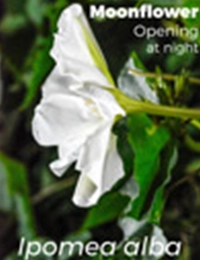
Next step is to go back in history and make sure that all earlier historians and ethnohistorians focused on the best known meaning: blue-green water. Then go deeper into the linguistic aspects of hule (ule). But I am frankly flabbergasted to find that Yaxha is a standard word for rubber of Castilla elastica, especially because with the help of park ranger Teco (Moises Daniel Perez Diaz) we have found three Castilla elastica trees and Merremia tuberosa. Q’eqchi’ Mayan plant researcher Senaida Ba have also found Ipomoea alba (which “vulcanizes” rubber as long known by Tarkanian). And I photographed flowers last week between Yaxha and Nakum that Elena Siekavizza was able to identify as Merremia umbellata, which has chemicals in the vine that can coagulate “vulcanize” latex from Castilla elastica.
So the Parque Nacional Yaxha Nakum Naranjo has four of the major components to produce Mayan ballgame rubber balls: the rubber tree and three different plants for coagulating the latex. Great discovery by the joint teams of FLAAR Mesoamerica and the park teams. We will be sharing all this with Michael Tarkanian of MIT, as he is a world-recognized chemical expert in “vulcanizing” rubber the way the Olmec, Maya, Aztec and everyone else did thousands of years before Thomas Goodyear.