Iconography of Classic Maya Enema Rituals, Maya Lowlands
Posted November 17, 2022
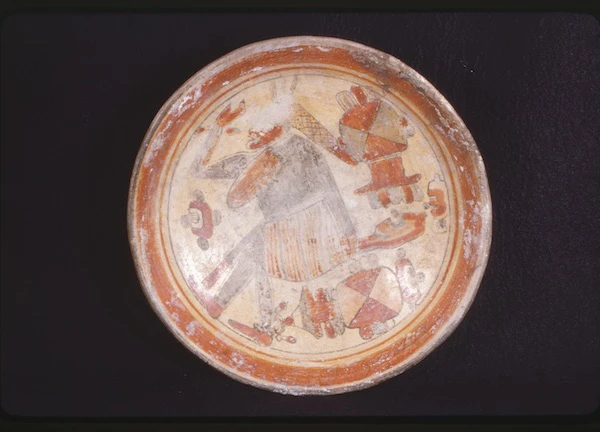
The enema ritual often involved a long ceremony before actually inserting the enema syringe. Tepeu 1 bowls and Tepeu 2 vases and bowls show dozens of individuals in elaborate rituals. Elsewhere only a few people are present (in Early Classic scenes).
In Late Classic scenes females often administer the enema. The women however they themselves do not receive enemas.
On Monday evening, Nov 21, 2022, a PowerPoint presentation will be delivered by Nicholas Hellmuth on his research on enemas that started in 1977, immediately after Furst and Coe announced their discovery in March 1977. This research by Hellmuth on the iconography and Peter De Smet on the chemical aspects won the Ig Nobel Prize 2022 for art history for Dr Hellmuth and Dr Peter De Smet. The iconographic aspect has been updated for the November 2022 presentation.
Classic Maya Enema Ritual Iconography
The Mysterious World of Maya Enemas
- Enema Jugs
- Enema Syringes
- Enema Bibs
- Enema Rituals
- Jaguars in Enema Rituals
- Females in Enema Rituals
- Hand-carried jugs or same jugs hung from necklace
8 pm EST, 7 PM CT, via ZOOM, via The Aztlander (newsletter) (link is on attached PDF) https://us02web.zoom.us/j/89340702821
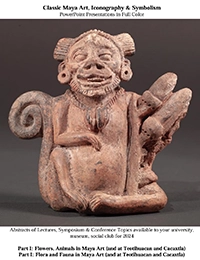
For zoologists: in addition to the common jaguar, deer, monkeys and other animals (or people in animal costumes) are occasionally present.
For iconographers: this ritual is shown in this PowerPoint much more often than published so far. Women are present in many of the scenes, however they themselves do not receive enemas; the females prepare the men to receive the injection.
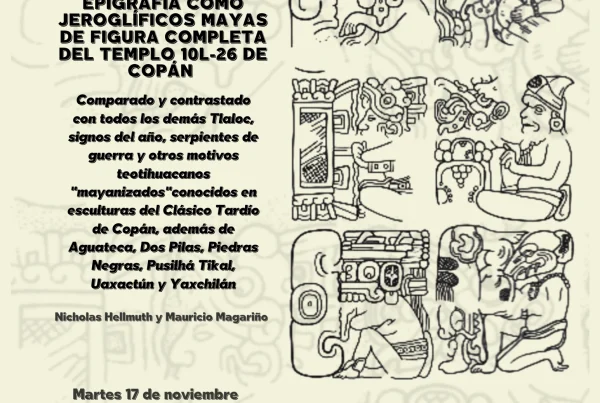
For epigraphers: updated study is needed of all the hieroglyphs and symbols associated with the enema jug and participants. The lecture shows dozens of enema jugs. Many of these jugs have hieroglyphs on the jug and other symbols nearby.
For botanists: LOTS of plants were ingredients in the enemas. Peter De Smet has studied this aspect in his PhD and subsequently. I still estimate that lots more plants were added (including possibly cacao). His documentation will be cited in the bibliography.
The lecture will be in English but questions can be asked and answered also in Spanish.