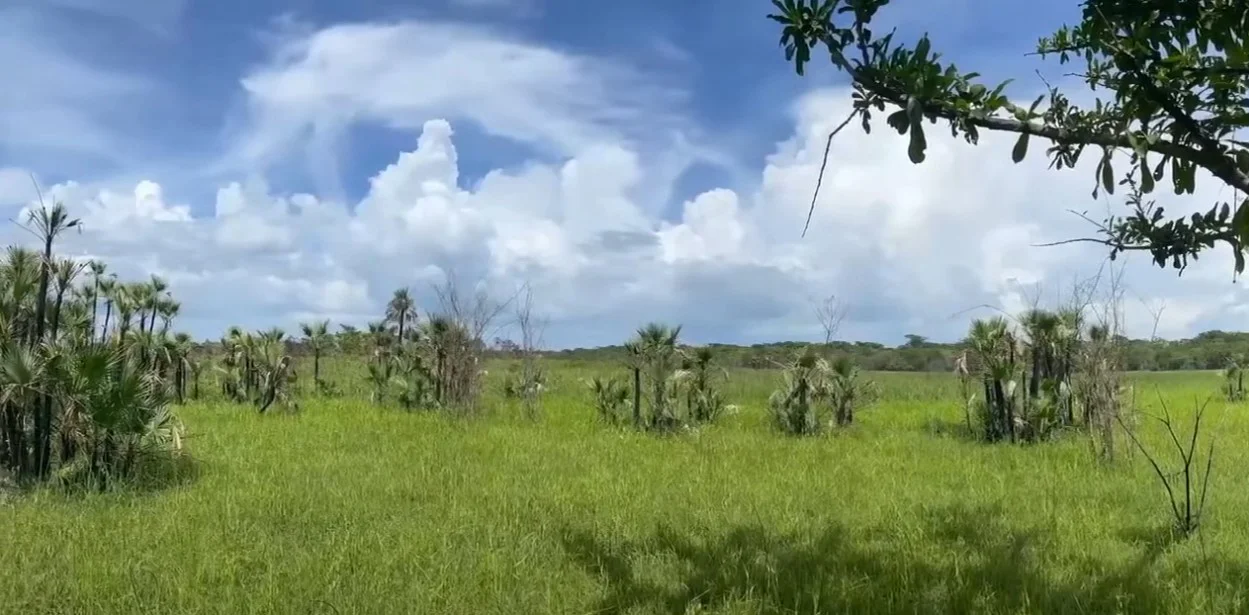
How did the Preclassic and Classic Maya use the savannas of the Reserva de la Biosfera Maya?
Posted October 5, 2021
Every month we are finding more open grassland savannas. We are focusing on the Reserva de la Biosfera Maya: northern half of Peten: from Chiapas-Peten border across Guatemala to the Peten-Belize border. And from Lake Peten Itza up north to the Peten-Campeche border.
We focus on this area since the savannas of southern Peten (around Poptun have lots of pine and karst dome (small hills) in the middle of most of the savannas). And the savannas from south of Lake Peten to the west around La Libertad towards Sayaxche are mostly destroyed (and were studied in the 1930’s by ethnobotanist Cyrus Lundell). Plus these savannas are different than the ones in the Reserva de la Biosfera Maya (RBM, which, so far, lack pine and lack Curatella americana, sandpaper leaf trees).
Were savannas burned annually for thousands of years? The tasiste, nance, and jicarra trees have evolved to be adapted to survive these fires.
Were the savanna areas of the RBM ever “forested” or were they always grasslands surrounded by bajo forest and sometimes hilltop forests at their edges?
Were any or many of these savannas or cibal sawgrass grasslands modified by the Maya (the way the Aguada Maya was totally modified, in Parque Nacional Yaxha, Nakum and Naranjo)?
And why do most of the savannas and cibal-savannas have a ring of stagnant water around their edges (in the transition zone between the open savanna and the closed bajo forest or hillside forest surrounding the open grasslands)?
Here is my emotional reaction to standing at the edge of an open grassland savanna that the helpful local people said had not been studied by ecologists, geographers, botanists, geologists, or students.
This is why we are initiating our wetlands field work in remote areas, far from any comfortable hotel or base camp. 80% of the Parque Nacional Laguna del Tigre has been capably studied by archaeologists, and other experienced soil scientists, botanists, zoologists, etc. We can contribute more by looking for hard-to-reach biodiverse ecosystems that need conservation. In order to preserve and preserve it helps to find and document what needs conservation.