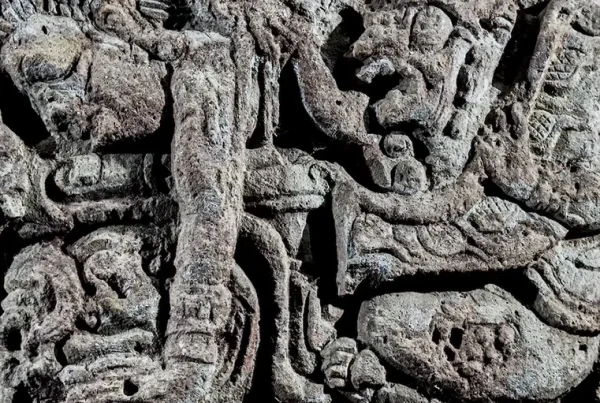
Bucutz (Cassia grandis) a tree of Peten with multiple uses
Images updated April 2024
First posted April, 2022 by Vivian Hurtado and Nicholas Hellmuth
Suggested bibliography by María José Toralla
The Bucutz, Bucut, Carague, Carao, Mucut (Mayan names) or Pink Shower in English has been a tree of great interest to the FLAAR Mesoamerica team for a long time, mainly because it is a cacao flavoring.
During our visits to different municipalities in Guatemala, we have confirmed the use of this tree as a flavoring agent. A local person from Petén shared with us his experience with the edible use of the tree: “The pods are edible and when they mature they turn black, measuring between 50-60cm. These pods have several cells that contain seeds much like those of a watermelon. It gives off a bittersweet honey, whose smell is not very pleasant, but the taste is.”
Cordero and Boshier (2003: 439) complement this information by mentioning that in Central America, especially Costa Rica, the sugary brown pulp that surrounds the seeds is used as a substitute for chocolate and the Mayans used it to sweeten drinks. The pulp is sweet but smelly. In Nicaragua it is cooked with milk and in Choluteca, Honduras and El Salvador they are made fresh. However, it seems to have laxative, cleansing and stimulant properties, so its use is limited. In Guatemala they are sold in markets in Petén for home medicine. They are also sold in markets and stores in El Salvador for their edible pulp, which is usually made into drinks.
On March 28, 2022 during our expedition in the Reserva de la Biósfera Maya, we found many Bucutz trees blooming. Mainly on the road from the center of San Andrés to Curce Dos Aguadas, where we begin to enter the RBM. It was an incredible surprise to find it, as we are always interested in documenting the flowering stage of useful plants like this to show the different phases of their development.
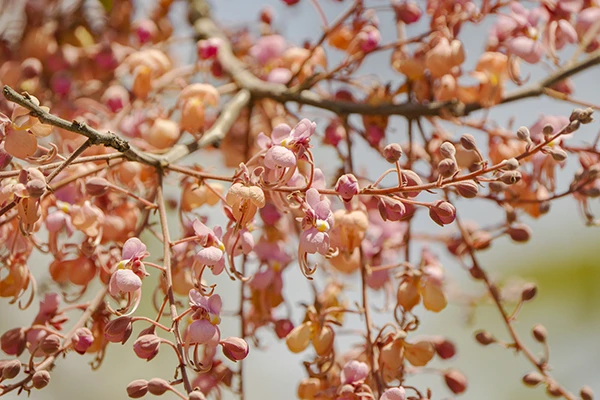
Cassia grandis flowers. Sacpuy, San Andrés, Petén (March, 2022). Photo by Edwin Solares
Taxonomy and description
| Dominian | Eukaryota |
| Kingdom | Plantae |
| Phylum | Spermatophyta |
| Subphylum | Angiospermae |
| Class | Dicotyledonae |
| Order | Fabales |
| Family | Fabaceae |
| Subfamily | Caesalpinioideae |
| Genus | Cassia |
| Species | Cassia grandis |
Cassia grandis is a tree that generally reaches a height between 10-18m and, on average, a diameter at breast height between 45-80cm. Its glass is irregular and round. The bark of its trunk is thick and smooth, brownish-gray in color. Its leaves are compound, alternate and measure approximately 50 cm long. Its flowers are pinkish in color and grow in a cluster 10-20 cm long and contain 15 or more flowers. Its pods are large, reddish, brown or black, up to 75 cm long, being one of the largest among the species of its family. They need a year to mature and do not open on their own. (Cordero, J. and Boshier, H. 2003: 442) As mentioned above, an edible pulp is extracted from these pods. According to Velasco et al (2010), the flowering stage occurs from February to May, and pod maturation lasts 18 weeks.
It is considered native to Central and South America and has now been widely distributed across both the New and Old World tropics as a result of cultivation as an ornamental and its uses for medicine, agroforestry, and as a wood product source (Toruan-Purba, 1999).
According to Janzen, (1971) C. grandis is often confused with C. fistula, but it has yellow flowers and a thinner pod than C. grandis
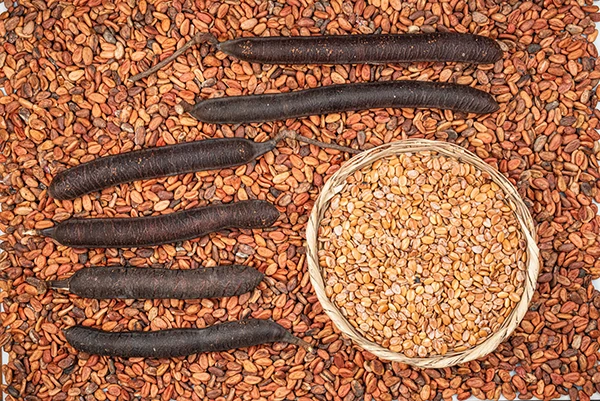
Six Cassia grandis seed pods and canasta filled with the seeds from inside other seed pods. The other photo shows the seeds inside three seed pods.
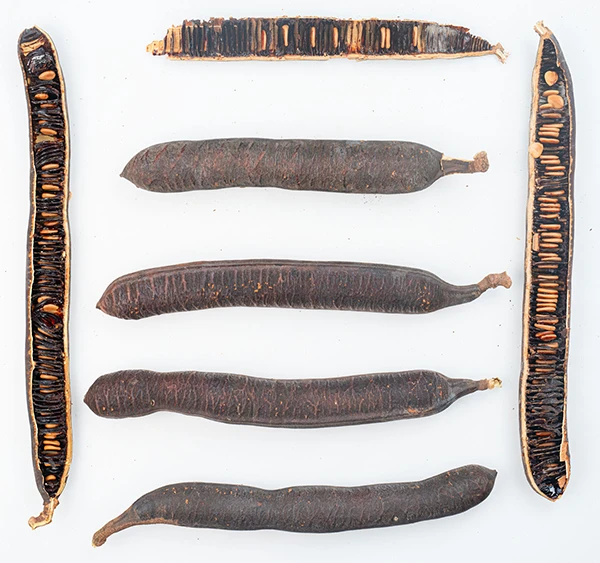
Four complete Cassia grandis seed pods and three cut in half. The seed pods are so solid, like solid wood, that it is not easy to open them neatly like we do here.
Local common names for Cassia grandis
Belize: bu-kèt, bookut, bu-kut, bu-kút, carao, stinking toe (Balick, Nee and Atha 2000: 86).
Guatemala: Bucut, Carague, Carao, Mucut (Cordero, J. and Boshier, H. 2003: 439).
Cassia grandis in Belize
Cassia grandis L. — Loc Use: MED, FOOD, BEV. — Reg Use: MED, ORN, FUEL, PRD, FOOD. — Nv: beef-feed, bu-kèt, bookut, bu-kut, bu-kút, carao, stinking toe. — Habit: Tree. (Balick, Nee and Atha 2000: 86).
So Cassia grandis can be used for medicine, food, beverage, fuel, to make products, and of course as an ornamental plant in a garden.
Cassia grandis in Mexico
Cassia grandis L. f. CAM, CHIS, COL, GRO, MEX, MICH, OAX, QROO, TAB, VER, YUC (Villaseñor 2016: 738). So this tree was available to the Classic Maya in Campeche, Chiapas, Quintana Roo, Tabasco and Yucatan.
Uses
Cassia grandis has a wide variety of uses. Not only is it edible and used as a cocoa flavoring, but it is also used medicinally and has many applications. Cordero and Boshier (2003: 439) indicate the following: The cooking of the leaf with salt is drunk for digestive tract illnesses. Washing and massage with the ground leaves is used for itchy skin. The drink of the leaf, flower, fruit pulp or seed acts against hysteria, nervousness, but can cause abortion in pregnant women. The root macerated in alcohol is applied as a tincture for skin infections. For fever and rheumatism, the infusion of the root and bark is drunk. In Honduras the leaf is crushed and applied to the skin for fungi, scabies, herpes, “jiotes” and white cloth. For anemia, the fruit is prepared in soda or milk and a glass is taken in the morning and at night. For cough and liver, take a glass of fresh fruit three times a day. The flowers mashed in lard are They are used to cure mange on the face of dogs.
C. grandis has been widely introduced for ornamental purposes, but has also been found useful for agricultural purposes; it is recommended for revegetation in especially periodically flooded areas, can be planted as a live fence, and is recommended for dry zone intercropping with perennial crops and in pastures, as cattle feed upon the plant’s fruit pods (ICRAF, 2014).
Economically speaking, it has potential when used for charcoal and firewood, and has been reported to provide multipurpose hardwood, used in joinery, carpentry, and beams, among other uses (Toruan-Purba, 1999). The seeds of C. grandis are also a potential commercial source of gums, seed gum is a potential binder for the pharmaceutical industry (ICRAF, 2014). In addition to the medicinal uses already mentioned.
Undoubtedly, the Bucutz is a very interesting tree with many uses, it is important to continue research on its properties as well as dissemination for its use.
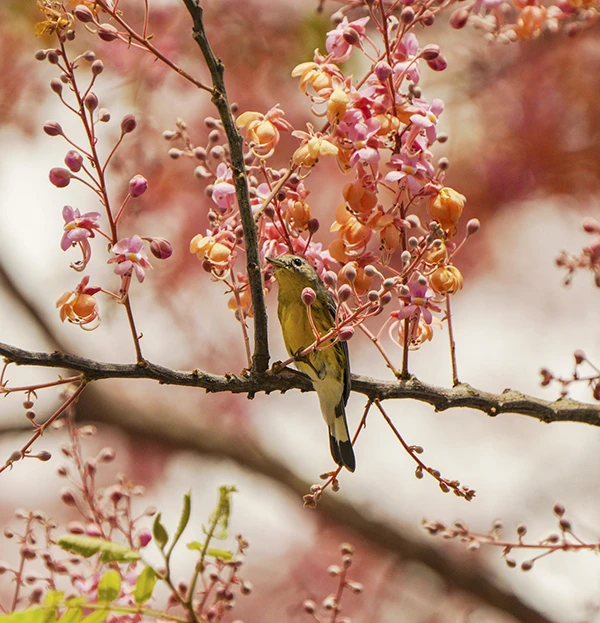
Cassia grandis. Sacpuy, San Andrés, Petén (March, 2022). Photo by Edwin Solares
Cited references
BALICK, Michael J., NEE, Michael H. and Daniel E. ATHA
2000
Checklist of the Vascular Plants of Belize: with common names and uses. New York Botanical Garden. 246 pages.
Plant family index on-line: www.nybg.org/bsci/belize/families.html.
Book format not available on-line.
CORDERO, J. and D. H. BOSHIER (editors)
2003
Árboles de Centroamérica: un Manual para Extensionistas (Trees of Central America: a Manual for Extentionists), OFI-CATIE, pages 439-442.
JANZEN, D. H.
1971
Escape of Cassia grandis L. beans from predators in time and space. Ecology 52(6):964-979.
Available Online:
www.jstor.org/stable/1933802
ICRAF
2014
Agroforestry Tree Database. Nairobi, Kenya: International Centre for Research in Agroforestry (ICRAF).
TORUAN-Purba, A. V.
1999
Cassia grandis L. In: Plant Resources of South-East Asia (PROSEA) No. 12 (1): Medicinal and poisonous plants 1.
VELASCO, E., PEREZGROVAS, R. A., GONZÁLEZ, V. A., HERNÁNDEZ, A., SALVADOR, M. and J. MARTÍNEZ
2010
Etnobotánica, fenología y reproducción de vainas en árboles de Cassia grandis L. f. del centro de Chiapas. Rev. Fitotec. Mex. Vol. 33 (4): 333 – 341
VILLASEÑOR, J. L.
2016
Checklist of the native vascular plants of Mexico. Revista Mexicana de Biodiversidad, Vol. 87, No. 3, pages 559-902.
Available Online:
www.redalyc.org/pdf/425/42547314001.pdf
Suggested reading to learn more on Cassia grandis
ALBUQUERQUE, P., BARROS, W., SANTOS, G., CORREIA, M., MOURÃO, P.
2014
Characterization and rheological study of the galactomannan extracted from seeds of Cassia grandis. Carbohydrate Polymers, Vol. 104. Pages 127-134.
Preview Online:
www.sciencedirect.com/science/article/abs/pii/S0144861714000125
BYE, ROBERT A., JR and EDELMIRA LINARES
1990
Mexican Market Plants of 16th Century. I. Plants recorded in Historia Natural de Nueva Espana. J. Ethnobio. 10(2):151-168. Winter 1990.
Available Online:
https://ethnobiology.org/sites/default/files/pdfs/JoE/10-2/ByeJrLinares.pdf
CORDERO, J. and D. H. BOSHIER (editors)
2003
Árboles de Centroamérica: un Manual para Extensionistas (Trees of Central America: a Manual for Extentionists), OFI-CATIE, pages 439-442.
Available Online:
https://repositorio.catie.ac.cr/handle/11554/9730
CACERES A, LOPEZ BR, GIRON MA, LOGEMANN H.
1991
Plants used in Guatemala for the treatment of dermatophytic infections. 1. Screening for antimycotic activity of 44 plant extracts. J Ethnopharmacol. 1991 Mar; 31(3):263-76. Faculty of Chemical Sciences and Pharmacy, University of San Carlos, Guatemala.
Sold Online:
www.ingentaconnect.com/content/ben/ctm/2019/00000005/00000001/art00005
CACERES A, LOPEZ B, JUÁREZ, X., DEL AGUILA, J. and S. GARCÍA
1993
Plants used in Guatemala for the treatment of dermatophytic infections. 2. Evaluation of antifungal activity of seven American plants. Journal of Ethnopharmacology, Vol. 40, No. 3. Pages 207-213.
Sold Online:
www.sciencedirect.com/science/article/abs/pii/037887419390070L?via%3Dihub
FLORES, E., RIVERA, D. and N. VÁSQUEZ
1986
Germinación y desarrollo de la plántula de Cassia grandis L. (Caesalpinioideae). Revista Biológica Tropical, Vol. 34, No. 2. Pages 289-296.
Available Online:
https://tropicalstudies.org/rbt/attachments/volumes/vol34-2/21_Flores_Cassia_grandis.pdf
JANZEN, D.
1971
Escape of Cassia grandis L. beans from predators in time and space. Ecology, Vol. 52, No. 6. Pages 964-979.
Preview Online:
https://esajournals.onlinelibrary.wiley.com/doi/abs/10.2307/1933802
LAFOURCADE, A., RODRÍGUEZ, J., ESCALONA, J. and C. LAURIDO
2014
State of art in Cassia grandis L. f. (cañandonga) / Estado del arte sobre Cassia grandis L. f. (cañandonga). Revista Cubana de Plantas Medicinales, Vol. 19, No. 1. Pages 21-28.
Available Online:
www.medigraphic.com/pdfs/revcubplamed/cpm-2014/cpm141d.pdf
LEVY TACHER, SAMUEL ISRAEL, AGUIRRE RIVERA, J. ROGELIO, GARCIA PEREZ, JOSE D. and MARIA MAGDALENA MARTINEZ ROMERO
2006
Aspectos floristicos de Lacanja Chansayab, Selva Lacandona, Chiapas. Acta Botanica Mexicana, Octobre, numero 077, pp. 69-98. Instituto de Ecologia A.C., Patzcuaro, Mexico.
Available Online:
www.scielo.org.mx/pdf/abm/n77/n77a5.pdf
LODHA, S., JOSHI, S., VYAS, B., UPADHYE, M., KIRVE, M., SALUNKE, S., KADU, S. and M. ROGYE
2010
Assessment of the antidiabetic potential of Cassia grandis using an in vivo model. Journal of Advanced Pharmaceutical Technology & Research, Vol. 1, No. 3. Pages 330-333.
Available Online:
www.ncbi.nlm.nih.gov/pmc/articles/PMC3255413/
MARCÍA, J., MONTERO, I., SARAVIA, S., VARELA, I., SILVA, C., HERNÁNDEZ, F., CRUZ, E., CASTRO, B., ZUMBADO, H. and M. ALVAREZ
2020
Physical-Chemical Evaluation of the Cassia grandis L. as Fortifying Egg Powder. Journal of Agricultural Science, Vol. 12, No. 8. Pages 277-232.
Available Online:
https://repositorio.unag.edu.hn/admin/archivos/eVGYce
MARCÍA, J., ZUMBADO, H., and E. AZNAR
2017
Caracterización química del Carao (Cassia grandis L.) cultivado en Honduras. Revista de Ciencias Farmacéuticas y Alimentarias, Vol. 3. 43 pages.
Available Online:
www.academia.edu/42030346/CARACTERIZACI%C3
PENNINGTON, T. D. and JOSE SARUKHAN
2005
Arboles tropicales de Mexico: Manual para la identification de las principales especies. 3rd edition. Universidad Nacional Autónoma de México, Mexico D.F.
PINO, J. A.
2011
Volatile Compounds of Cassia grandis L. f. fruit from Cuba. Journal of Essential Oil Research, Vol. 22, No. 6. Pages 599-601.
Preview Online:
www.tandfonline.com/doi/abs/10.1080/10412905.2010
QUESADA, A., PESANTES, O., BUSTAMANTE, K., AUXILIADORA, M. and V. TAFUR
2016
Actividad antimicrobiana de Cassia grandis L. f.Revista Universidad de Guayaquil, Vol. 122, No. 1. Doi: https://doi.org/10.53591/rug.v122i1.452
Preview Online:
https://revistas.ug.edu.ec/index.php/rug/article/view/45
QUIRÓS, Susana
2007
Estudio del efecto de la pulpa del fruto de Cassia grandis (Carao) sobre el músculo liso de diferentes tejidos in vivo y ex vivo. Magister thesis. Universidad de Costa Rica. 101 pages.
Available Online:
here
TILLÁN, J., RODRÍGUEZ, J., GÓMEZ, J., PARDO, Z. and S. AGÜERO
2004
Actividad antianémica de la Cassia grandis L. Rev Cubana Farm, Vol. 38, No. 3.
Available Online:
http://scielo.sld.cu/scielo.php?script=sci_arttext&pid=S0034-75152004000300009
VELASCO, M. E., PEREZGROVAS, R. A., GONZÁLEZ, V. A., HERNÁNDEZ, A., SALVADOR, M. and J. MARTÍNEZ
2010
Etnobotánica, fenología y producción de vainas en árboles de Cassia grandis L. f. del Centro de Chiapas / Ethnobotany, phenology and pod yield in trees of Cassia grandis L. f. at Central Chiapas. Rev. Fitotec. Mex, Vol. 33, No. 4. Pages 333-341.
Available Online:
www.scielo.org.mx/pdf/rfm/v33n4/v33n4a11.pdf
Websites
Description and pictures
https://catalogofloravalleaburra.eia.edu.co/species/202
Information and pictures
www.naturalista.mx/taxa/160171-Cassia-grandis
Botanical description
http://orton.catie.ac.cr/repdoc/A0008s/A0008s36.pdf
Description, distribution and ethnobotany
www.nparks.gov.sg/florafaunaweb/flora/2/7/2788
Characteristics and uses
www.missouribotanicalgarden.org/PlantFinder/PlantFinderDetails.aspx?taxonid=280436&isprofile=0&letter=C
Description, distribution tables, pictures and general information
www.cabi.org/isc/datasheet/11439