Palm Paradise Peten—“Islands” of Solid Palm Trees in PNYNN
Posted February 18, 2025
by Nicholas Hellmuth
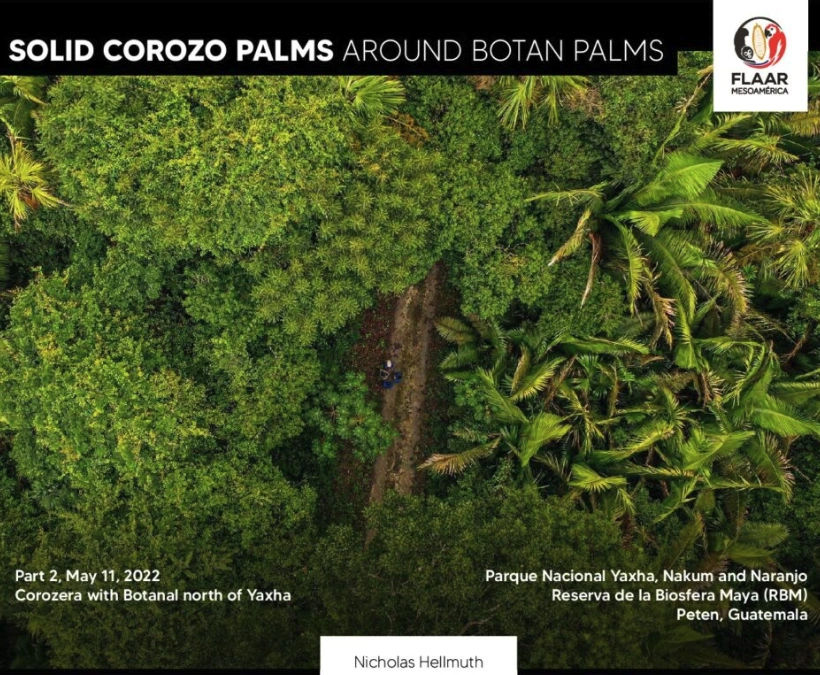
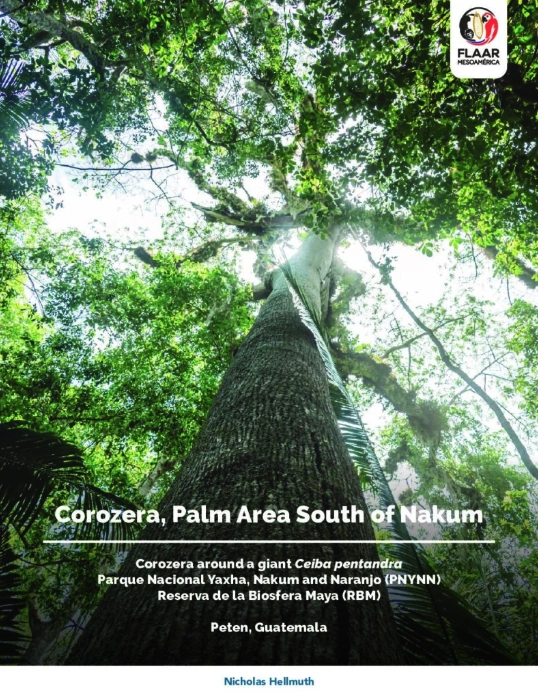
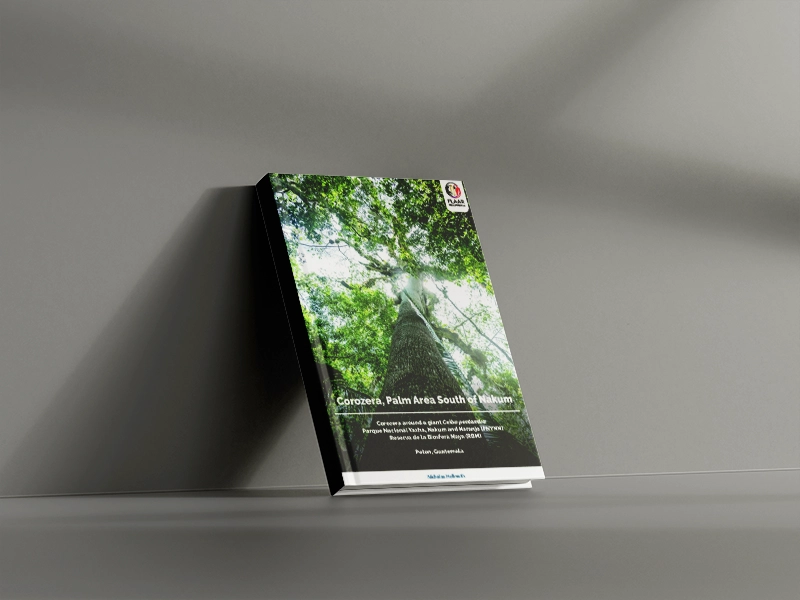
In the 1970’s, while hiking from Yaxha to improve an earlier map of Nakum, the FLAAR team experienced two incredible islands of solid corozo palms so thick with palms that it was amazing. Local people call these a corozera. They are an estimated 80% corozo palm and 10% guano/botan palm—so 90% solid palm trees as far as the eye can see. We have documented the two “palm islands” between Yaxha and Nakum (see below) and now for April 2025 will be hiking to a previously unexplored and undocumented “solid palm jungle area” to the east of the main trail (a corozera that park ranger Teco, Moises Daniel Perez Diaz, told us about recently).
We will also document an escobal/botonal “island” of escoba and botan palms west of Nakum. Then drive through Tikal National Park to reach Uaxactun to explore an amazing corozera south of Uaxactun. We will also document, photograph and map two corozeras adjacent to the Maya ruins of Naranjo-Sa’al. In future field trips, once we have suggestions by park administrators and park rangers at other parks, we wish to document more ecosystems that are solid palms (each about the size of one or two football fields). Most are surrounded by bajo vegetation but the one south of Uaxactun and one at the entrance of Naranjo-Sa’al are partially on karst limestone hills.
Palm Paradise Peten can attract eco-tourists who want to walk through a palm area that no TV documentary has ever shown. Eco-tourism helps encourage to protect fragile ecosystems and provides income for local guides and local hotels.
It would help if a kind soul or foundation could donate the funds so we can purchase a multi-spectral drone—these can map each ecosystem and show from the air the boundary of each “island of palm”. If the helpful individual or family can also donate the cost of a field trip, they can come along and experience the Palm Paradise Peten together with the team of FLAAR (USA) and FLAAR Mesoamerica (Guatemala). This project is part of the 5-year program of cooperation and coordination with CONAP (Consejo Nacional de Áreas Protegidas) and with the administrators of each national park in this Neotropical rain forest area of Guatemala.