Current anthropology projects in Latin America
Anthropology is the broadest term to cover a diverse range of scholarly disciplines that include ethnography, ethnology, archaeology, epigraphy, art and architectural history. In European universities Greek or Roman archaeology is taught either in an institute of archaeology or in art history departments. In Europe the archaeology of pre-Columbian Mesoamerica tends to be taught in a language department or department of “ancient America.” In the US, the archaeology of Belize, Guatemala, Honduras, Mexico and El Salvador tends to be taught in a department of anthropology.
In American departments of archaeology, or departments of art history, the studies tend to focus on Greco-Roman civilizations. Exceptions exist, but the FLAAR director has two degrees in anthropology (Harvard and then Brown University) and then an advanced degree in art history (in Europe, where pre-Columbian iconography happened to be a personal interest to the Kunstgesichte faculty of a university in Austria).
As a result of our international background, at FLAAR we are multi-disciplinary, so we don’t pigeon-hole our anthropological and archaeological research. Our current long-range programs are dedicated to encouraging higher quality digital photography for recording and utilization of higher quality photographs in publication in all fields of anthropology by means of employing advanced digital imaging technology.
Our largest on-going anthropological research is dedicated to preparing an encyclopedic inventory of the natural resources of Guatemala, Belize, and adjacent portions of Honduras and Mexico, as well as pertinent parts of El Salvador and Costa Rica that interacted with the Mesoamerican civilizations from 2000 BC through to the time of the Spanish conquest in the 15th-16th centuries.
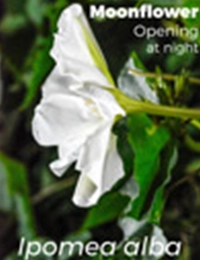
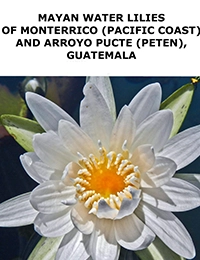
We include under the rubric of natural resources the plants, animals, and minerals that were utilized by indigenous peoples in the daily life, rituals, religious beliefs, myths, and trading with other peoples. Our web site www.maya-ethnobotany.org provides scholars, students, and lay people outstanding photographic coverage of the sacred Mayan flowers of Guatemala.