Search for ceiba flowers
(flowers of the sacred Maya world tree)
(flowers of the sacred Maya world tree)
Posted Nov. 26, 2012
I have seen “Guatemalan” ceiba trees flower outside my hotel in Israel (we are a consultant to high tech Israeli firms in advanced digital imaging). But in 49 years in Guatemala I have never seen a Ceiba pentandra tree flower. This year I found out why.
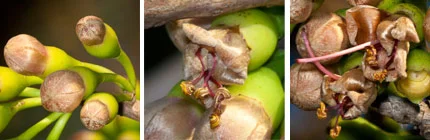
First, a Ceiba pentandra tree flowers only at night; to be precise, the flowers open between 6:30 pm and 7 pm. Second, many of the flowers get knocked off the tree by the frenzy of hundreds of bats which fly crazily around to lap up the yummy sweet nectar in each tiny flower. While we were photographing the ceiba flowers we had to wear hats to keep from having out heads dented by the literal hail storm of flower buds being knocked off as the bats crash landed to suck on the flowers (not to mention bat feces and bat urine).
Fortunately these bats were content to suck on the flowers, not to suck on our exposed necks.
A single tree had easily over one thousand flowers open up, simultaneously, in the space of less than 20 minutes.
Third, a mature ceiba tree may flower only once every several years. And fourth, each individual tree decides when, or whether, it wishes to flower. An identical ceiba tree 10 meters away will act totally different and have a completely independent annual cycle.
But after decades of not being in the right place at the right time to witness a ceiba tree in full bloom, last week I experienced two different mature ceiba trees (each one over two hundred years old). We will have full-color discussions upcoming. Plus we hope to return with a zoologist specialized in studying bats to do close-up photography of the bats in action (fortunately they are not vampires; two species of vampire bats, however, live nearby). But last week it was not quite full moon. So we survived safely (other than being drenched with bat droppings, which is all part of Mother Nature).
Note: November is neither a normal nor expected month for ceibas to flower; the normal month is January onward. But not every individual ceiba tree does what the botanical textbooks and peer-reviewed botanical journals state they are supposed to. This is why we at FLAAR research institute, get out of our university offices and libraries and do actual field work.
If you want to see ceiba trees, come to Guatemala. But if you are in Guangzhou, China, there are several hundred beautiful spine-covered 15-year old ceiba trees lining the main highway near the Guangzhou airport and along the main road paralleling the river through the city. I have seen scores of these ceiba trees while doing consulting on digital printing technology with Chinese ink, substrate and printer factories.