Discovering more Mayan houses with palm thatch
Posted October 07, 2015
While driving through Paso Caballos, Peten, we noticed that about 80% of the Q’eqchi’ Mayan houses had palm thatch roofs. Of these, an estimated 40% had tin lamina across the very top, but at least half the thatch huts had palm thatch all the way to the top, including the delicate crest area.
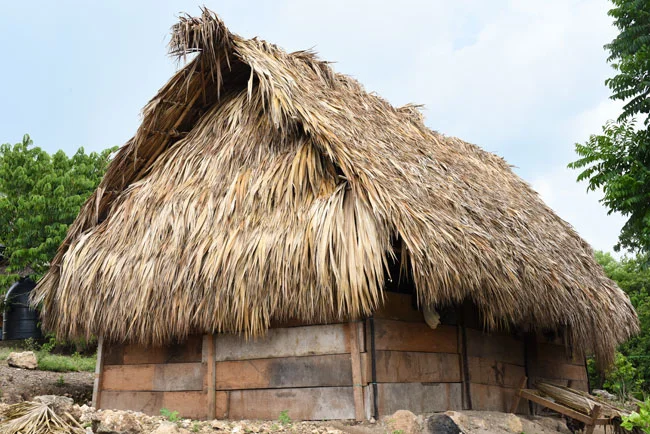
Guano palm thatch-roofed Q’eqchi’ Mayan house, Paso Caballos, Peten, facing the Rio San Pedro Martyr.
After driving and walking through the village with the local Q’eqchi’ Mayan guide, we could document that 100% of the thatch appeared to be guano palm (Sabal species). In other words, there was no junco “palm” here, and no corozo palm.
Several days later, while driving back to Guatemala City, we noticed that in the area of Candelaria Campo Santo that more than half the Q’eqchi’ Mayan houses here had corozo palm thatch roofs. But one house was of grass (Ak in Q’eqchi’). Since we wanted to reach Coban before dark, we did not walk around the settlement to see what other kinds or thatch we could find (we know many of the local people here since we have been spending weekends in this area for over six years).
So for architects and ethnobotanists who seek to study house architecture of the Maya, here are two places where you can find dozens of houses with the most common palm: guano in one village and corozo in another.
We have also found a town far away where at least 30% of the roofs are ak. In other areas a few are ak grass but most others palm.
Last year we found another town where most of the thatch roofs are junco “palm” (“ “ because junco is neither a true palm nor even a tree; but it looks identical to guano palm, until you see the flowers). In the same village of junco, other roofs are of corozo palm.
And we have found another settlement area where most of the roofs are palma real.