Did the Maya or other cultures in Mesoamerica smoke leaves of Wigandia urens (or use its leaves as flavoring)?
Posted January 08, 2020
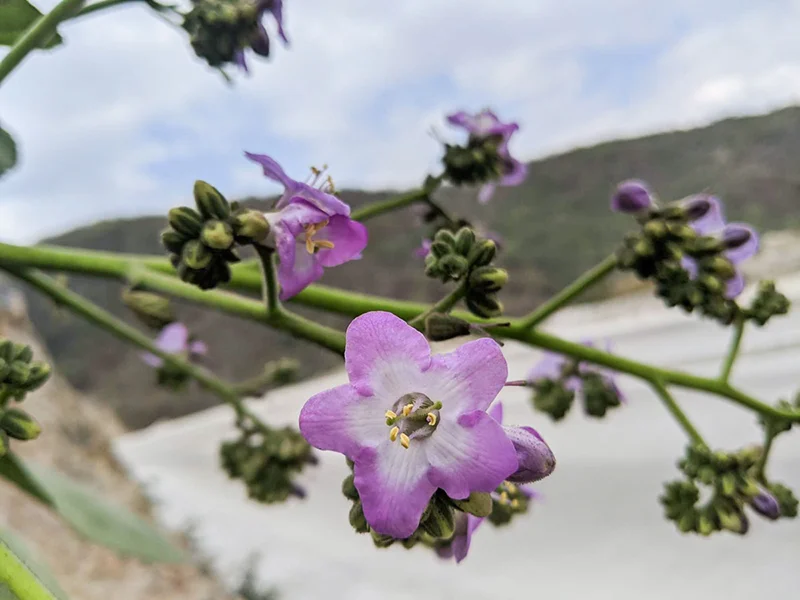
Wigandia urens photographed in Guatemala with the Google Pixel.
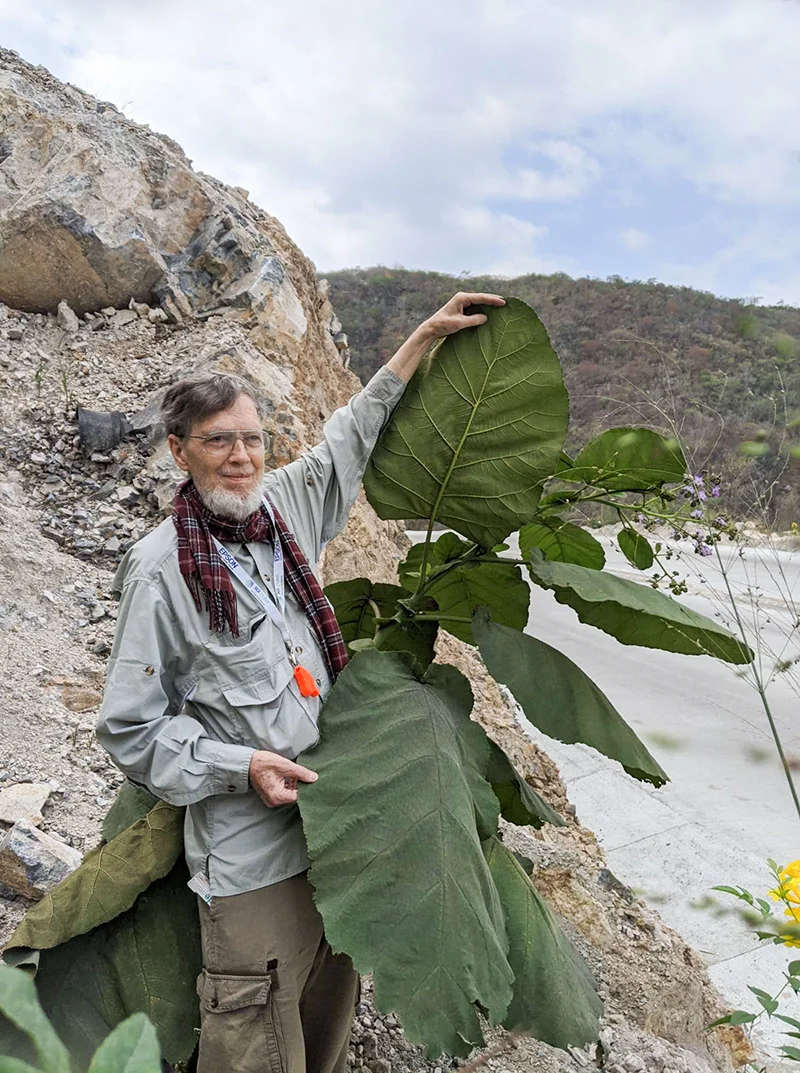
Here is Dr Nicholas holding the gigant Wigandia urens leaf by the road.
Nance leaves were commonly used to wrap tobacco cigars among the 16th-17th century Lowland Maya, so likely the Classic Maya did also (Byrsonima crassifolia).
Leaves of guarumo (Cecropia species) are commonly used by chicleros when they run out of cigarettes while out in the remote areas of Peten.
Ratsch lists many plants with potent chemicals smoked by shamans (footnote 263). Plus during my past years research on incense of the Highland Maya, the number of plants used as “flavoring” and to create smoke is remarkable, and often this “incense” is in fact breathed in through the nose of the celebrants (so knowingly affects them, another way of ingesting smoke chemicals besides putting the cigar in your mouth). So it would be expected that the Maya, and Aztec, Mixtec, Zapotec, etc. had the options of additional plants to smoke besides just native tobacco.
While doing research on Wigandia urens we found that it’s common names include the words Tabacón and lots of other variants of the word Tabaco, such as Tabaco Cimarron. However in several hours research not one monograph or article on ethnobotanical research on a Mayan area made clear specific acceptable mention of the leaves being smoked. So the question is whether the words tobacco as common name are simply because the leaf is similar in size and shape to a tobacco leaf? Let’s hope a student undertakes this as a thesis topic: what plants other than tobacco are, or were in past generations, smoked or used as snuff by the Highland or Lowland Maya. Similar thesis topic could be useful for Veracruz and Oaxaca.
Wigandia urens, family Hydrophyllaceae, one common name in Guatemala, chocon; Nahuatl (Aztec) designation is Tzitzicastli (though touching the leaves does not give the effect of true chichicaste; I know since I held many leaves while measuring them last week along Guatemalan Highway CA-9, kilometer 60 to 70.
Additional reading on tobacco is on websites of FLAAR (USA) and FLAAR Mesoamerica (Guatemala). For example, tobacco is a source of dye colorant.