Native palms are source of food, medicine, and material for ropes and mats
Updated March 2, 2020;
earlier version posted February 25, 2020
In most areas of the Maya Lowlands you get a dozen or more species of palms. In fact in Parque Nacional Yaxha Nakum Naranjo you get entire eco-systems of primarily palms: guano palm ecosystems (guanals), corozo palm ecosystems (corozera), spiny broom palm ecosystems (escobal). We are now finding ecosystems (seasonally inundated areas) that have only tasiste palms (tasistal; we documented two in the area of Arroyo Petaxbatun and nearby areas, Peten).
The Municipio of Livingston shares many aspects with Peten and adjacent Alta Verapaz: karst geology, lots of caves, etc. But since the Municipio of Livingston faces the Caribbean Sea on its eastern edge, you get salt water and hence mangrove swamps (not visible in most of Peten or Alta Verapaz).
Courtesy of the Alcalde (Daniel Esaú Pinto Peña) and the coordinator of Municipio programs of research, school education, and tourism (Edwin Leonel Marmol Quiñonez) we were brought to Livingston and provided boats, guides, and help in getting to diverse ecosystems. The first palm that stood out was along the shore near Tenamit Maya Hotel (south shore, north end, El Golfete area of Rio Dulce).
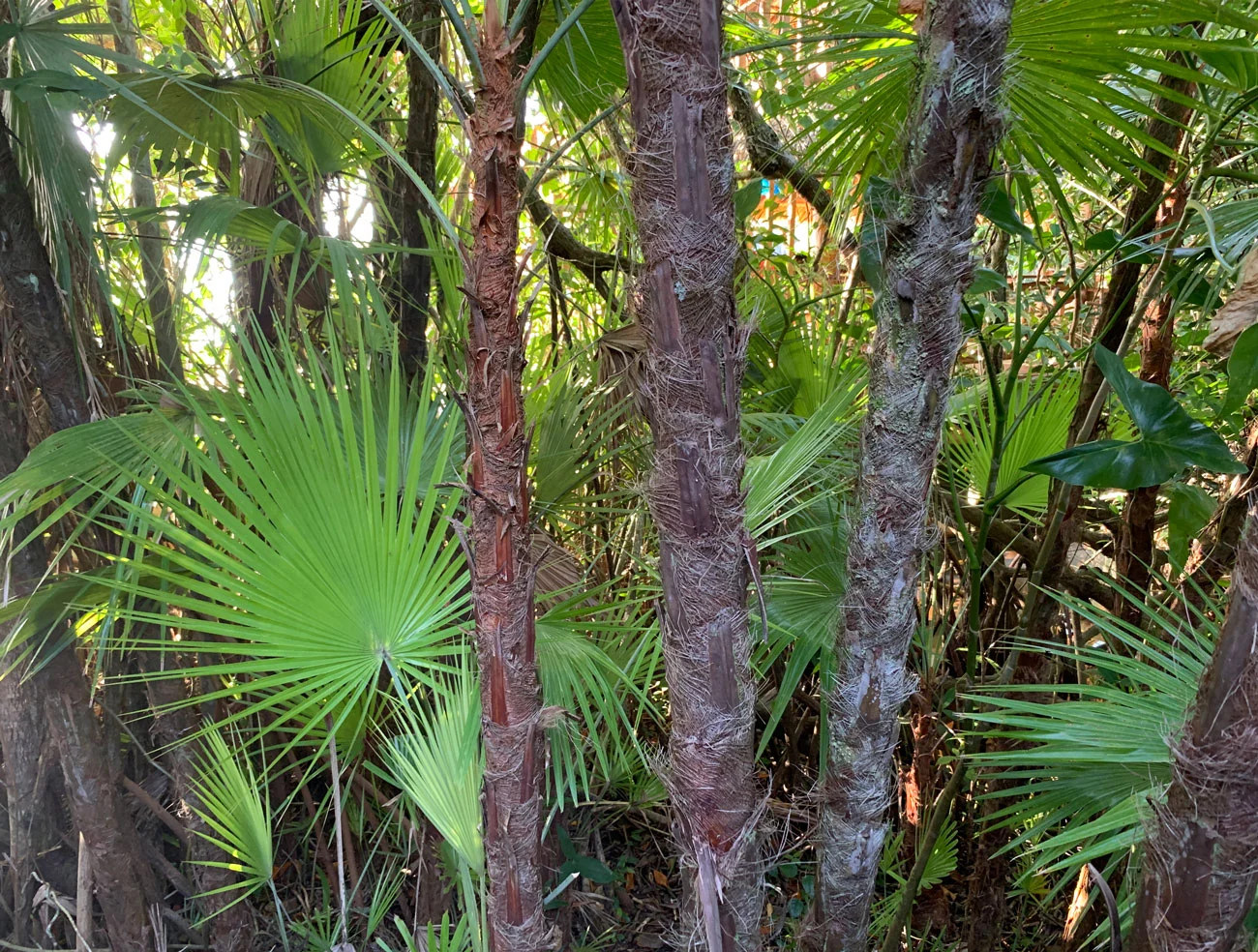
These palms looked identical to tasiste palms but the local name in Izabal area is pimiento or pimientillo. The word tasiste is simply not known. Thus at first we estimated this is a visual “twin” to tasiste but is a different genus and different species. We are checking to see whether the palm in Municipio of Livingston is Schippia concolor because the name in nearby Belize is Silver pimento palm, mountain pimento palm.
However the inflorescences we saw were not yet open, so we don’t know whether they are the “white fluffy size and shape” seen in most photos of Schippia concolor in full bloom.
Perhaps the correct spelling is pimento or pimentillo?
Victor Mendoza, our in-house plant-identifier, suggested (on the basis of our photos) that these palms are indeed tasiste, Acoelorrhaphe wrightii. So when we return to the Municipio of Livingston, we will re-photograph the inflorescences and flowers (since now they will be more open). And, we will look in other ecosystems to find Schippia concolor.